Introduction
Data scraping used to be a game of strict HTML parsing. You look for a `<div>`, grab the text, and save it. But what happens when you are scraping the decentralized, chaotic ecosystem of AI startups? A tool might launch on ProductHunt as 'ChatPDF AI', be listed on HackerNews as 'ChatPDF', and exist on a directory as 'Chat-PDF'. How does a machine know these are the exact same entity?
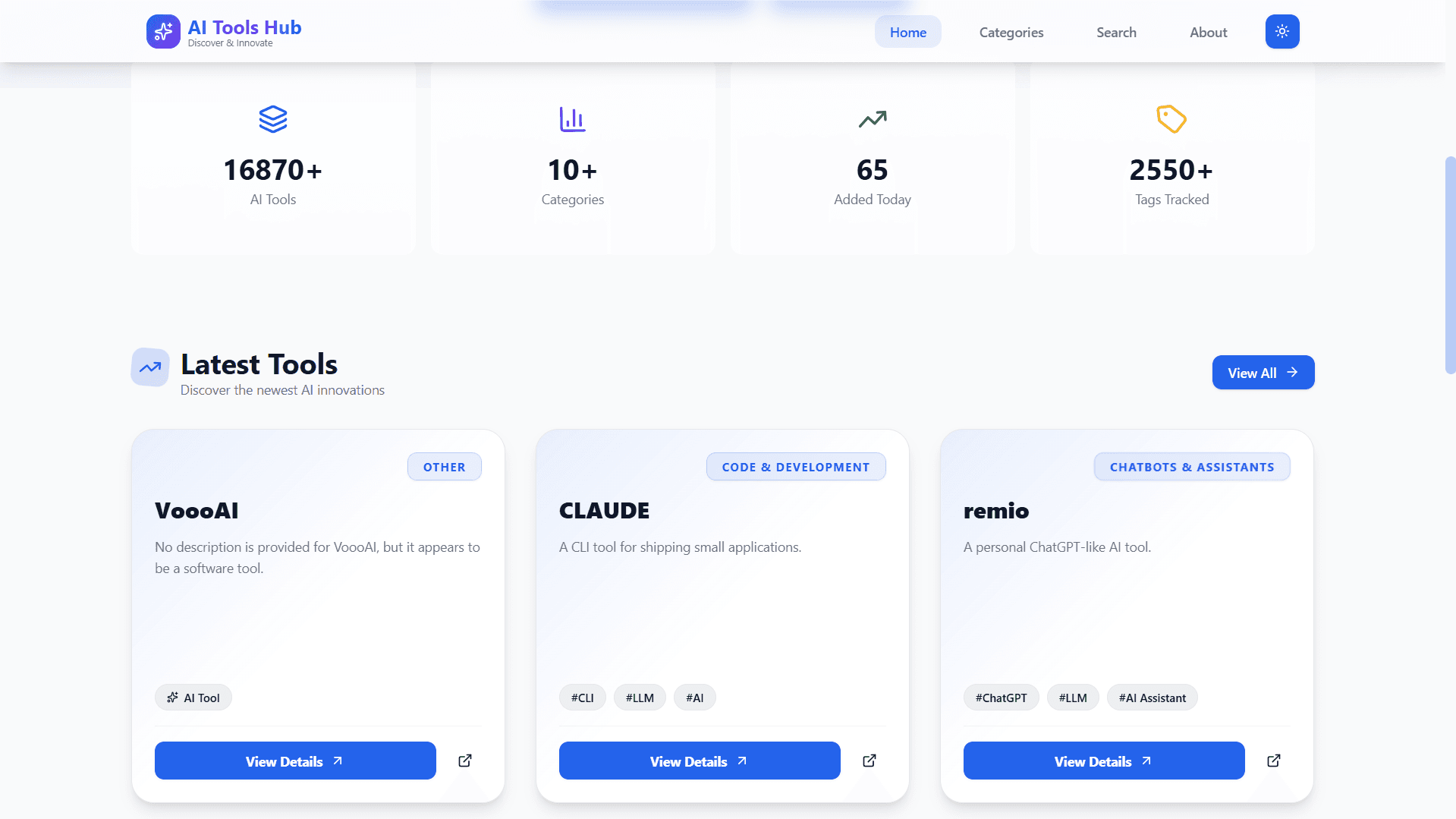
When building AI Tools Hub, an autonomous platform that constantly crawls multiple distinct web sources to discover new AI tools, the biggest theoretical challenge wasn't the scraping itself. It was the 'Identity Crisis' of unstructured data. We needed a system capable of semantic normalization.
The Fallacy of Exact String Matching
In traditional computer science, `A === B` is absolute. But human language is messy. If our database already has 'Midjourney v6' and a scraper finds a new entry for 'Midjourney-6', a strict string comparison will insert a duplicate. Over time, the platform becomes a graveyard of fragmented, duplicated entries, destroying the user experience. We needed a way to mathematically evaluate the *similarity* of strings, rather than their exact equivalence.
Dumb scrapers just collect text. Intelligent data pipelines normalize reality.


Architecture
To solve the Identity Crisis, I implemented a two-step normalization pipeline. Step one uses the Levenshtein Distance algorithm. This is a theoretical string metric for measuring the difference between two sequences by counting the minimum number of single-character edits (insertions, deletions, or substitutions) required to change one word into the other. Before inserting a new tool, the orchestrator calculates its Levenshtein distance against existing database entries. If the similarity breaches a high confidence threshold (e.g., 90%), it is flagged as a duplicate.
Step two handles semantic divergence using Large Language Models (LLMs). Sometimes the name is completely different, but the core URL or functionality is identical. We pipe the raw, scraped metadata (description, tags, raw text) into an LLM via a strict JSON-schema prompt. The LLM acts as an autonomous librarian, stripping marketing fluff, generating a unified taxonomy categorization, and ensuring the entity is standardized before it's ever indexed. Combining Levenshtein distance with LLM-based semantic parsing creates a nearly impenetrable wall against data decay.
What I prioritized
Theoretical frameworks for handling unstructured web chaos:
- Levenshtein Distance. Mathematically quantifying the edit-distance between two strings to catch slight variations.
- LLM Taxonomy Normalization. Using AI to autonomously convert marketing copy into rigid, filterable database categories.
- Fuzzy Logic Pipelines. Shifting from strict boolean equivalence to confidence-threshold matching.
- Autonomous Orchestration. Executing these heavy computational checks entirely within serverless edge environments.