Introduction
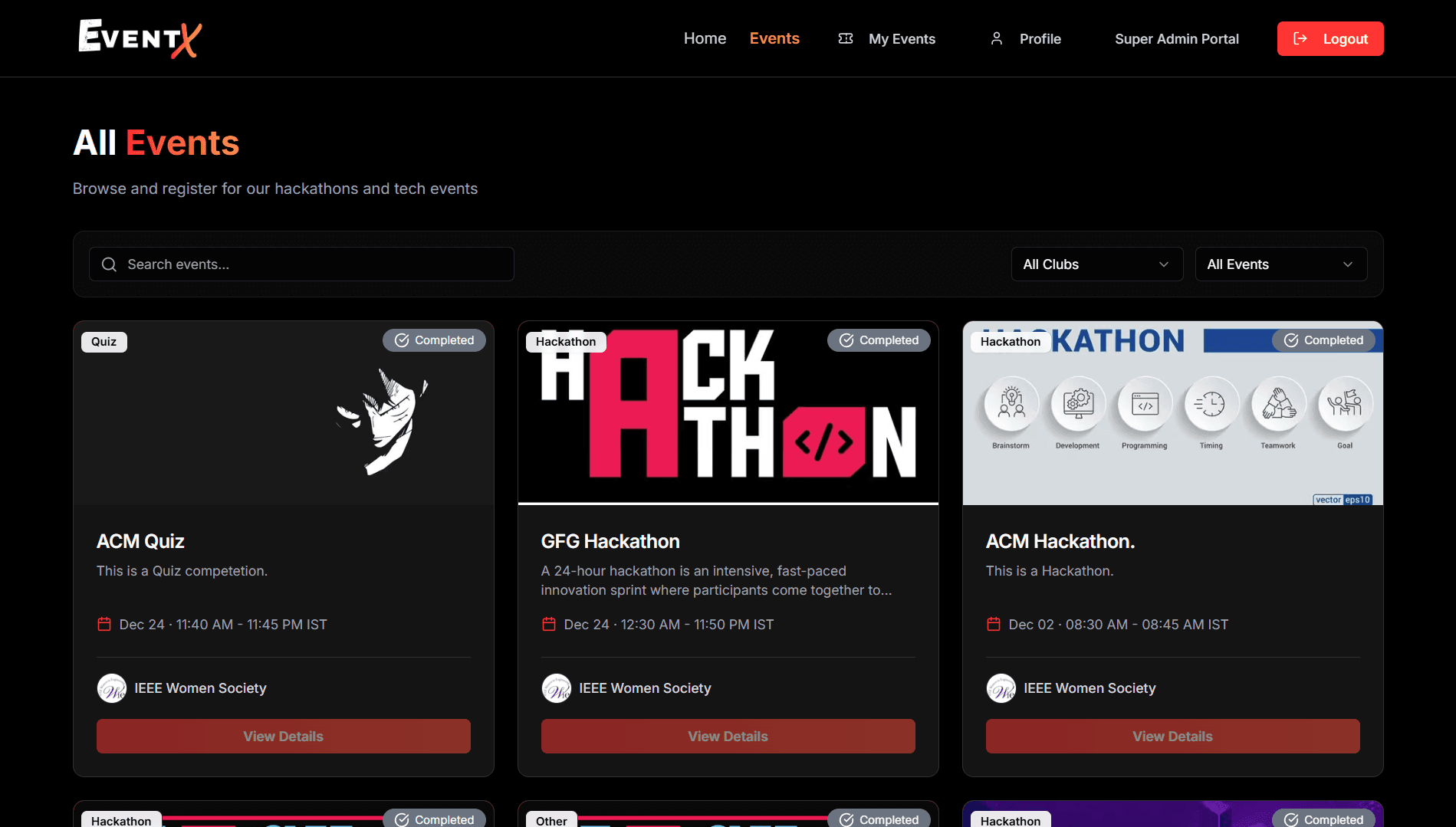
EventX started as a question: what would a college event platform look like if it consolidated registration, custom data collection, and payments into a single, club-managed hub? The product is a modern, full-stack application featuring a dynamic form builder, strict role-based administration, and automated registration approval workflows.
The problem with fragmented event management
Existing college event solutions rely heavily on disconnected tools—treating Google Forms as a database and relying on manual spreadsheets for approval tracking. They cannot execute unified payment flows, do not offer club-specific administrative isolation, and fail to provide a cohesive dashboard for participants to track their status. For a student organizer, that is the inverse of useful.
A platform built for campuses should know the clubs, manage the approvals seamlessly, and securely handle the payments. Anything less is just a digital flyer.





Architecture
I engineered a multi-tier role-based access architecture—routing users into Super Admin, Club Admin, and Participant flows. On top of that sits the Dynamic Form Builder: a system that serializes custom field schemas and participant responses into PostgreSQL JSONB columns, allowing every event to define its own unique registration requirements.
The data layer is heavily optimized for scale, utilizing custom RPC functions to batch participant counts and JWT local verification via the jose library to completely eliminate database round-trips on authenticated requests.
What I prioritized
A few of the technical decisions that mattered most:
- API Performance. Implementing JWT local verification, RPC functions, and five targeted composite indexes reduced query execution times by up to 76%.
- Dynamic Data Structures. Leveraging JSONB in PostgreSQL to support custom form building and response collection without requiring schema migrations per event.
- Automated Workflows. Asynchronous email operations for registration updates and a strict Draft/Publish state machine for event visibility.
- End-to-End Payments. Native Razorpay integration embedded directly into the registration flow for paid events.